

In my forthcoming book on everyday spirituality I have a chapter called “darkness” Here’s an excerpt from that chapter.
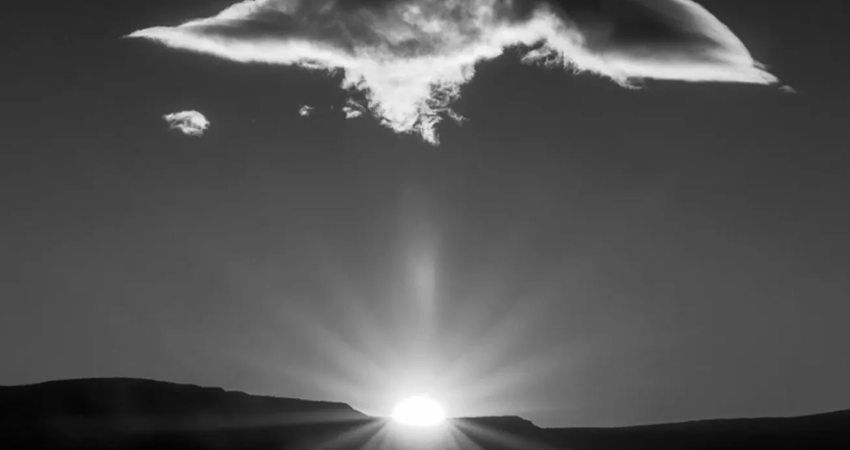
Silence as the presence of something rather than its absence is an important aspect in the mystical tradition within many religions. Silence and darkness function as invitations to enter into the Unknowing – the mystery of the numinous and of life itself. This is perhaps what Douglas E. Christie is writing about in The Insurmountable Darkness of love when he says that darkness “releases us from our compulsive need to account for everything, explain everything”. Darkness is an invitation to mystery, wonder and bewilderment – portals to encounter the transcendent. In this bewilderment, rather than encountering an empty space, we can encounter some-thing – the Numinous. This contrasts to the way we usually think about the transcendent as being found in the rational, in ordered spaces and in ready-made solutions to our chaos. Instead, we can find God in the chaos.
The mystical tradition in Christianity uses the word apophatic to describe this aspect of the numinous. Contrary to the kataphatic tradition which emphasises the knowability of God, an apophatic perspective reminds us that God is essentially unknowable and indescribable – surpassing any human attempt to be boxed. Christian tradition has historically trodden the kataphatic path– arguing that we can know God through Jesus Christ, nature and scriptural revelation. The apophatic has been marginalised, however it has been held close by the mystics who understand how to embrace mystery.
Can this apophatic tradition speak into our times today? Christie makes an interesting observation and wonders whether the mystical tradition or the apophatic can contribute to the world today with all of its gritty social problems that seemingly require action, certainty and planning. In a world where the messaging is “Silence is complicity” is there any room for speechlessness? He writes;
“Still, the language and images of apophasis are increasingly surfacing within contemporary accounts of dislocation and loss, sometimes explicitly, other times more implicitly. Loss, exile, darkness and emptiness reverberate through such accounts and invite, I think, a reconsideration of the meaning and significance of apophatic thought in light of them”.

The language of exile, the image of the desert and experiences of loss and suffering are all familiar to people with religious faith. I’m wondering if the apophatic can be a helpful way for all people even without faith, to navigate our present crisis in the world today. Many of us today are speechless when we observe the rise of cruelty, hatred, violence, abuse of power and climate catastrophe. Sometimes there are words we can use to talk about these things. Other times, there are no words and only silence is left when we face the horror of what is before us and the loss we feel. So there is a potential appropriation of and connection to the apophatic numinous or transcendent for all of us who are feeling disoriented today. Perhaps this is something we can reach for when we feel that disorientation and loss – we grieve, we are silent and we say “we have no words.” When we do this, we are entering the realm of the apophatic numinous.
Rev. Dr Karina Kreminski, Mission Catalyst – Formation and Fresh Expressions, Uniting Mission and Education. Karina also blogs at An Ordinary Mystic.