

Every faith carries an attic. Tucked away up there are the beliefs and practices that once felt as solid as the front door, but have since been quietly retired, argued out of existence, or simply left behind as the world changed shape. Australian Christianity has an attic of its own, and it is more interesting, and at times more troubling, than we might expect.
Here are eight beliefs and practices that once shaped Christian life in this country, and the story of why each one faded.
1. The Wowser Sabbath. Sunday used to mean something very specific in colonial and Federation-era Australia. Protestant church groups, mockingly nicknamed “wowsers,” worked to keep Sunday free of work, shooting, swimming and shopping, and for decades they largely succeeded. Sunday trading bans, limited transport and quiet streets were the result of a genuine joint campaign, led mostly by Presbyterians and Methodists, to keep one day different from the rest. It held for generations. Then came postwar leisure, organised weekend sport, and a slow removal of the trading laws, and the wowser Sabbath lost its grip on everyday life. The campaigners did not fail through lack of conviction. They simply lived to see the world around them stop agreeing.
2. The Children’s Pledge. Children once made lifelong promises they could not really understand, and the church encouraged it. The Band of Hope, running in Australia from around 1860, signed up children as young as six and had them promise never to drink alcohol, usually straight after Sunday School. Adults made a similar promise through the Independent Order of Rechabites, a club that combined the no-alcohol pledge with sickness and funeral payouts for members. The movement even built its beliefs into brick and stone. Melbourne’s Federal Coffee Palace, a nine storey, 560 room hotel that served no alcohol at all and opened in 1888, was the grandest building of its kind the Southern Hemisphere had seen. None of it survived the century. The Rechabites eventually dropped the no-alcohol rule from their health fund, the coffee palaces started serving alcohol or were pulled down, and a movement built on lifelong promises discovered that lifelong is a long time to hold a line.
3. The Colonial Faith Healers. Before faith healing found its modern home in Pentecostal churches, colonial Australia had healers working inside the ordinary, mainstream churches. George Milner Stephen, a former acting governor of South Australia, believed he had a gift for healing people through touch and prayer, and by 1877 he was reportedly treating more than fifty patients a day, some of it with water he claimed to have blessed, and he offered free healing days at a Sydney hall for those who could not pay. He was mocked in the newspapers as often as he was believed. John Alexander Dowie, a minister in Sydney’s Newtown, saw Stephen’s healings and built an entire ministry around the same idea, before legal trouble over unauthorised street marches sent him to the United States, where he founded his own religious community and became one of the key early figures behind the modern faith-healing movement. As medicine became more professional, the mainstream churches quietly stepped back from healing ministry, and the impulse that began in a Sydney church found its future somewhere else entirely.
4. Days of Prayer for Rain. For well over a century, Australian governments called official days of prayer, and the whole community was expected to take part. Colonial governors called these “days of humiliation and prayer” during drought, most often asking for rain, and followed them with days of thanksgiving when the rain came. Governor Gipps called one in 1838. More were called in 1866, 1869, 1895 and 1902. For a moment each time, a colony made up of many faiths and backgrounds stopped together and prayed for the same thing. As government became more separate from religion, and drought became something handled by science and policy rather than collective prayer, the practice quietly disappeared. Rain became something we forecast rather than something we prayed for as a country.
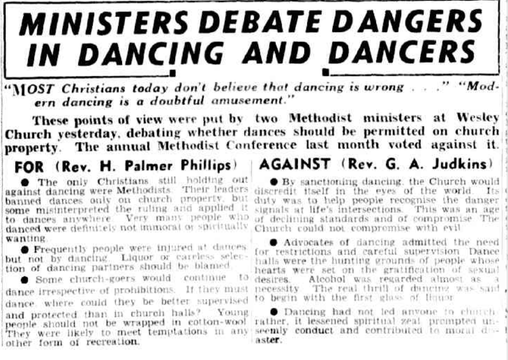
5. The Methodist Bans and Fellowship Meals. Australian Methodism once asked a great deal of its members in the other direction too. Dancing, card games and going to the theatre were all seen as improper, and early twentieth century newspapers ran headlines like “Methodists Condemn Modern Dancing.” Alongside these rules sat gatherings that have almost entirely disappeared from Uniting Church life today: the class meeting, where a small group of members took turns describing how their faith was going that week, the love-feast, a shared meal where people spoke openly about their faith, first held in New South Wales in 1812, and the watchnight service, held every New Year’s Eve. Through the twentieth century, Methodism gradually shifted its focus from personal rule-keeping toward social causes, the old bans relaxed, and the close, personal gatherings that had once held small congregations together largely faded along with them. Watchnight survives in some places. Most of the rest does not.
Credit: National Library of Australia
6. British Israelism. Not every belief on this list was ever widely accepted, and this one should be named as a fringe idea from the start. British Israelism was the belief that the people of Britain were literally descended from the ten lost tribes of ancient Israel, and it did find some genuine support in Australia. Reading rooms promoting the idea operated in Tasmania. The Governor of Western Australia, Sir Francis Newdegate, openly believed it, and the Anglican Bishop of Ballarat, Samuel Thornton, wrote approvingly of what he called British-Israel truth. It was later taught, and then dropped, by an Adelaide-based church movement. The mainstream churches never adopted it as official belief, and it eventually lost credibility through ordinary biblical scholarship and its uncomfortable link, overseas, to a racist movement called Christian Identity. It is a reminder that even respected church leaders can hold beliefs that history quietly leaves behind.
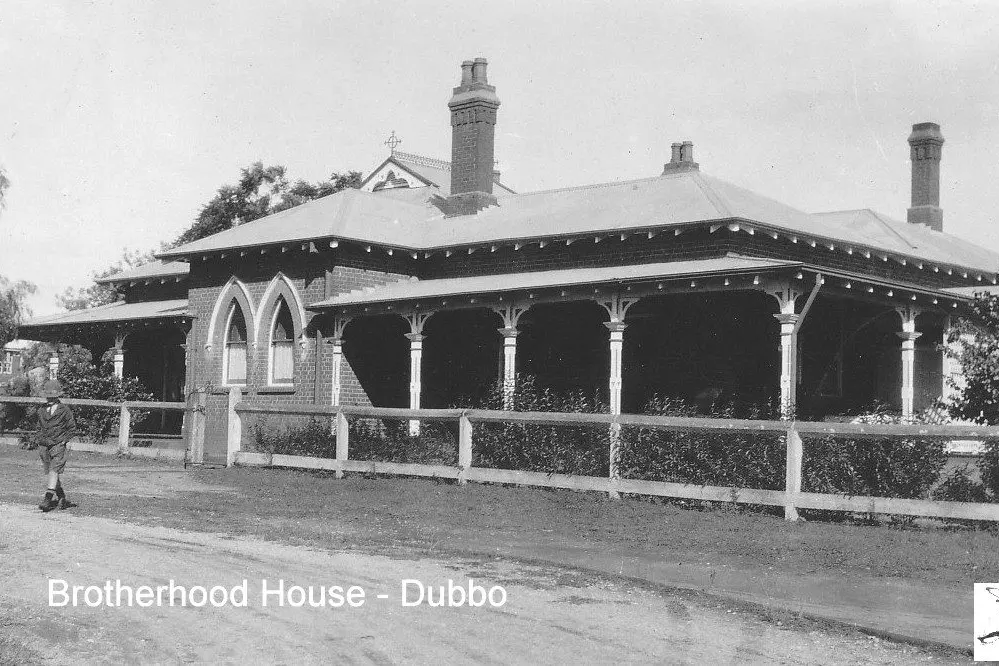
7. The Bush Brotherhoods. Serving the huge, thinly populated regions of rural Australia called for something unusual, and the Anglican Church answered with the Bush Brotherhoods. These were groups of unmarried priests, many of them English, who committed to a fixed term of service and rode enormous distances on horseback to reach isolated communities. Bishop G. H. Frodsham of North Queensland put out the call at Oxford in 1908 for “a band of men that will preach like Apostles, ride like cowboys, and will therewith be content,” using Apostles here simply to mean the earliest followers of Jesus, sent out to spread the faith. One such group, the Brotherhood of the Good Shepherd, began at Dubbo around 1903 and ran its own magazine from 1904 until 1980. Cars and better roads eventually did what drought and distance could not, and the model declined through the 1960s. The last surviving member of one of these brotherhoods died in 2025, closing a chapter that had lasted well over a century.
Credits: Dubbo Photo news
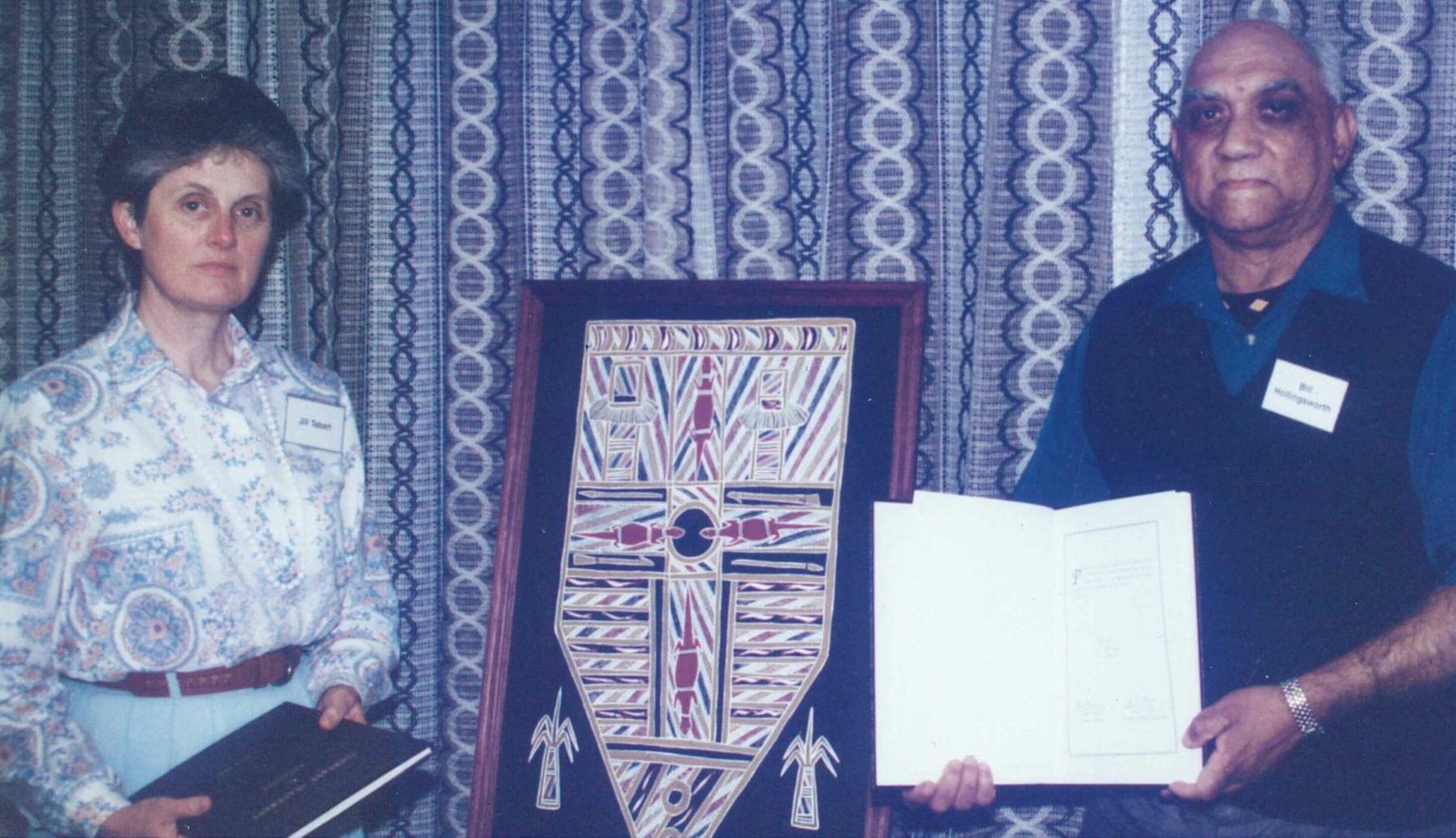
8. Mission Suppression and the Church’s Apology. The most serious belief on this list is one the Uniting Church has itself formally rejected, and it deserves to be told with the weight it carries. On some missions run by churches that later formed the Uniting Church, most clearly at Mapoon and Aurukun on Cape York in Queensland, Aboriginal children were removed from their families and housed in dormitories, and their traditional language and cultural ceremonies were discouraged or banned outright. A Mapoon elder, Jean Jimmy, later recalled being placed in the dormitory at the age of three: “We were not allowed to talk lingo, our language, because we might learn our legends and things like that.” The picture was not the same everywhere. Missionaries in Arnhem Land generally learned and respected local Aboriginal languages, and Christian faith came to exist alongside traditional Aboriginal spiritual practice there in a way it did not on Cape York, though children were still removed from their families at some of those missions too. Change came largely because Aboriginal Christian leaders pushed for it themselves. After Aboriginal and Islander Christians formed their own national body within the church, the Uniting Aboriginal and Islander Christian Congress, in 1985, the two groups entered into a formal Covenant in 1994. The Uniting Church’s national president at the time, Dr Jill Tabart, read the church’s statement aloud, saying, “We grieve that the way in which our people often brought the Gospel to your people, belittled and harmed much of your culture and confused the Gospel with western ways,” and asking for forgiveness for wrongs done knowingly or unknowingly, and the Congress chairperson, Pastor Bill Hollingsworth, responded on its behalf. The church apologised specifically to the Stolen Generations, the Aboriginal children removed from their families under past government policies, in 1996, twelve years before the Australian government’s own national apology. In 2009, the church went further, formally declaring that Aboriginal people already knew God, through their own law, custom and ceremony, long before European missionaries arrived. It is, in the truest sense, a belief that time forgot, because the church chose to leave it behind.
None of the people who held these beliefs were foolish for holding them. They were doing, mostly, what seemed right to them with the understanding they had at the time. Some of what we now take for granted will look just as strange, or just as troubling, to those who come after us. The honest response is not to laugh from a safe distance, but to keep asking what we might be getting wrong right now.