

We’ve had a few deaths in the neighbourhood.
And every time I heard about each death, my reaction was to draw my breath in, put my hand over my mouth and exclaim “Oh no”. Then tears welled up in my eyes. And a pause; silence.
Each time I am surprised that one day the person is in the local park with their dog, or waving to me from their front porch, or messaging me about an article they read that they loved, or sitting in their usual spot having a smoke, and the next they are no longer there. One day they are there the next they are gone. The suddenness of death can be breath-taking.
In my book coming out in 2027, I’m exploring an “Everyday spirituality”- sort of a spirituality for non-spiritual people; more about the ordinary than woo-woo – OK, maybe just a little woo-woo. It seems to me that we need to include death in this way of thinking about spirituality. After all, it’s strange when we are shocked by death when it appears, since it’s an everyday kind of thing happening all the time, in every part of the world and to all of us eventually. It’s a transnational, undesirable but faithful companion to us all. Most of us have felt the icy touch of death’s bony fingers at some stage. Perhaps via a health scare, a suffering friend, relative or pet that has died or maybe even by being confronted with some kind of danger. Death is an everyday part of life. That doesn’t make it easier to accept. We are fearful of the things we know very little about and no one has come back from the dead to tell us exactly what lies behind that impenetrable curtain. And even if any claim to have done so, my suspicion is that we moderns would not believe them – we would rationalise away the experience and demand undeniable but impossible proof. We remain agnostic about death and the afterlife. And most of us remain fearful.
Tasmanian Jane Rawson in her frank book Human/Nature candidly describes the process of death and decay. How would decay work, Rawson asks,
if you dropped dead somewhere unseen and unnoticed, beyond the reach of human society? While we’re alive, our cells work very hard to keep bacteria from taking over our entire body. As soon as we die, a build- up of carbon dioxide ruptures the cell membranes and the body becomes the domain of the microbes. These, and our body’s own enzymes, begin to break down all the substances we are made of. Flies- mainly Calliphora species – arrive early, laying eggs that hatch into maggots who will feed on the human body, Sarcophagidae flies arrive to leave their live young around the same time. If there are scavenging carnivores around – Tasmanian devils perhaps or dingoes, wedgies or currawongs – they might tug off a chunk or two for a feed. After two or three weeks, our skin is sliding off, liquid has leaked out of us and we’re full of bloating gases from the process of decomposition. As the body splits open, these gases escape, and beetles of various sorts begin arriving to cart off the now-softened flesh. The liquids from our body have seeped into the soil to be shared among the plant, fungi and soil microbes. Eventually, only bone and hair are left, and thousands of creatures are replete thanks to us handing over our matter to the great cycle of life.
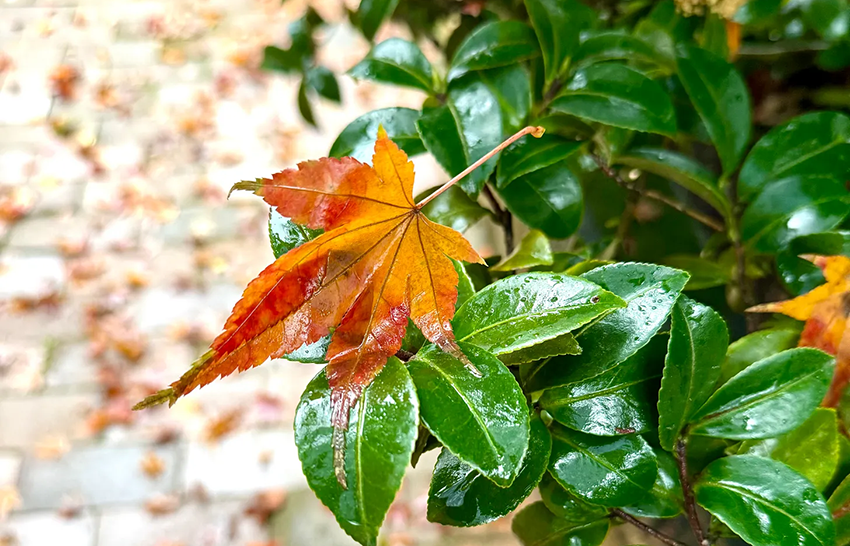
Rawson’s description of a decaying body is stark and perhaps too confronting for Westerners who are used to speaking about death in more hushed tones. But I discern an ordinary spirituality in her account. Sometimes the truth of things is more beautiful than anything we fabricate. The process of decay as summarised by Rawson is mundane but powerful, it is grounded, real and reflective of the ancient, faithful cycle of nature. The message is clear – humans are a part of nature – from dust we come and to dust we return. We are born of earth and dirt and ultimately rest forever in it. And we can contribute to nourishing the earth as our bodies decompose – think of it as composting.

Are we not deeply connected to plants, animals, waters and skies? Are we not made of stardust? Are we not nature ourselves? Too often we separate ourselves from nature instead of accepting that we emerge from and merge with nature. This is an everyday spirituality which points to the transcendence in all things – we see all things as threads woven into the never-finished web of life. And dying and living in our local spaces – like neighbourhoods – are everyday glimmers of this eternal cycle.
Rev. Dr Karina Kreminski, Mission Catalyst – Formation and Fresh Expressions, Uniting Mission and Education. Karina also blogs at An Ordinary Mystic.