
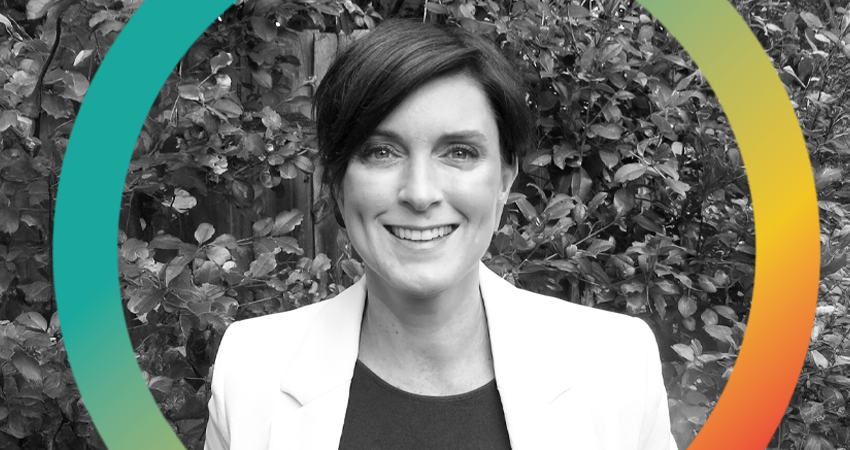
When Robyn Whitaker speaks, she does so from a place where church, academy, and public life intersect. That intersection — often avoided, sometimes contested — is precisely where her work is grounded. And it is what she will bring into sharp focus at ONE this October.
Robyn is not simply a biblical scholar or church leader. As Director of the Wesley Centre for Theology, Ethics, and Public Policy in Melbourne, her vocation is to help theology step beyond the walls of the church and engage the realities of contemporary life. It is a task she approaches with both intellectual rigour and pastoral urgency.
In her own writing about the Centre’s vision, Robyn is clear about what drives her work: a conviction that Christian faith has something meaningful to say to the world as it is, not just the church as it was. She describes the Centre as an effort to “bring a theologically informed, research-based Christian voice to the public square,” engaging real issues rather than retreating from them.
That outward posture is key.
Robyn has consistently resisted the idea that theology belongs only in academic journals or Sunday sermons. Instead, she has built a public voice writing for mainstream platforms, appearing in media, and contributing to national conversations on ethics, justice, and culture. Her work has been recognised widely, including being named among Australia’s “top thinkers” by The Conversation.
But what makes her contribution distinctive is not just visibility. It is the way she approaches the task.
In interviews and public commentary, she emphasises the need for a different kind of Christian voice, one that is neither defensive nor simplistic. She speaks of the importance of “compassionate, loving, and intelligent” engagement in public life, pushing back against the idea that faith-based contributions must be narrow or reactionary.
This approach is grounded in a deeper theological conviction: that the Gospel calls Christians into the complexity of the world, not away from it.
That conviction is evident in the kinds of issues Whitaker engages. Through the Wesley Centre, she has helped foster conversations on topics as diverse as disability, political ethics, artificial intelligence, and gendered violence. Areas where theology and public life intersect in challenging ways.
In a recent public conversation on rising social division, she pointed to the deep polarisation shaping contemporary society and suggested that the Christian response must be rooted not in hostility, but in the difficult work of love “the gospel tells us to love our enemies,” she noted.
That is not a soft or abstract claim. It is a call to a different posture one that requires humility, listening, and a willingness to engage across difference.
This is where Robyn’s voice will be particularly significant at ONE.
As the Church gathers to consider what it means to be “one,” her work offers both a challenge and a framework. Unity, in her vision, is not achieved by avoiding difficult conversations or retreating into like-minded communities. It is forged through engagement, through the patient, often uncomfortable work of dialogue and discernment.
She has written candidly about the dangers of isolation, noting that people of faith can live in “bubbles no less than anyone else,” cut off from the very world they are called to serve. That insight lands with force in a time when both society and the Church itself can feel increasingly fragmented.
At ONE, Robyn is likely to push beyond surface-level discussions of unity and ask deeper questions. What does it mean for the Church to be a credible public witness? How does theology shape not just what we believe, but how we engage issues of justice, power, and community? And what kind of presence is the Church called to embody in a divided world?
Her background as a New Testament scholar also brings a critical edge. Robyn’s research, particularly in areas like the Gospels, Revelation, and the use (and misuse) of Scripture, equips her to challenge simplistic readings of the Bible and to invite more thoughtful, responsible engagement.
But this is not about critique for its own sake. It is about clarity.
Robyn’s work consistently returns to a central idea: that theology matters because it shapes how we live. It shapes how we see others, how we respond to injustice, and how we participate in the common good.
For those gathering at ONE, that perspective offers something both grounding and expansive. It reminds the Church that its calling is not limited to internal life, but extends into every part of society. And it challenges participants to consider how their faith is expressed not just in belief, but in action.
In a moment when the Church is navigating change, Robyn brings a steady but challenging voice. One that refuses easy answers, but insists that thoughtful, faithful engagement is still possible.
And necessary.
At ONE, she will not simply offer ideas. She will offer a way of seeing, a vision of a Church that speaks with depth, listens with humility, and steps into the public square not with fear, but with hope.
Visit the ONE websitefor more information and to register.