

April 3-5 – Easter
(Good Friday) – Isaiah 52:13 – 53:12, Psalm 22, Hebrews 10:16-25 or John 18:1-19:42
(Easter Day) -Acts 10:34-43 or Jeremiah 31:1-6, Psalm 118:1-2, 14-24, Colossians 3:1-4 or Acts 10:34-43, John 20:1-18 or Matthew 28:1-10
The story of Easter is surrounded by violence and human struggle. It is into the context of the world’s darkness that the story and life of Jesus must be heard. It is from those places of darkness, oppression, impoverishment, struggle and hopelessness that the Easter story speaks loudest and its light shines most brightly.
There is the juxtaposition of themes throughout the whole Passion Narrative. As the crowds gather to celebrate and look to past deliverance and liberation for hope in their lives now, this Passover will be shrouded in darkness – at least for those who recognised in Jesus, the life of God. In Jesus’ own words he holds the celebration and the imminent pain together. ‘This bread broken… This cup poured… One of you will betray, another deny…’ As the disciples struggle to grasp the meaning of his words, Jesus pushes on into the reality of what awaits him.
A hymn, a wander into the garden, praying tears of blood, seeking another way but then surrender into God’s will. Isn’t this what we have wrestled with through Lent? The evening turns dark as the powers and principalities of the world collude to bring him down. Fear, jealously, power, status quo, greed and all the elements that struggle for priority in our world are there and they condemn this One.
A kangaroo court, insipid injustice, collusion of powers, imposition onto the Governor, who acts in fear and desire to quell the excited religious leaders and maintain such pseudo-peace. Jesus is sentenced, flogged, stripped and hung up to die a humiliating and painful death. The powers, it seems, have prevailed and darkness, evil and violence have overcome this One who claims the Reign of God. He lays beaten and dead in a tomb as the Sabbath descends.
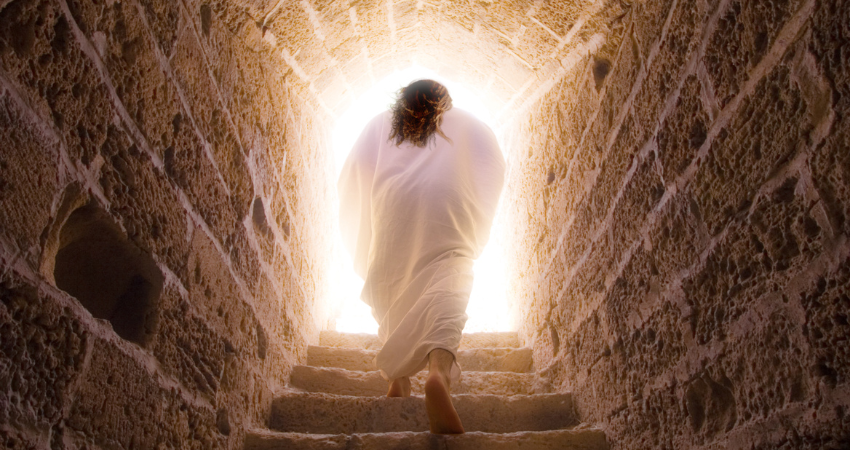
It is in the Sunday morning pre-dawn darkness that Mary wanders to the tomb (John 20). Emotions overwhelming and the need to be near, to cry and express grief, pain and anger. All the emotions the littles ones of our world understand and live with. It is out of darkness – it must be! – that Mary goes to the tomb to discover it open, empty and confusion reigns. Disciples run to the tomb, enter and discover it empty. They believe! Believe what? That the tomb is empty or the mystery of resurrection? Mary, meanwhile, seeks the body and approaches a ‘gardener’ asking if he has taken the body. He says, ‘Mary’ and her eyes are opened, through the darkness of her world, light enters and she sees. She is told to report to the disciples, and they are left in their confusion, fear, uncertainty – just as we often are when we encounter this profound mystery of Christ’s presence in our lives.
We follow this story and the confusion, the mystery and the wonderment of people as they grasp an experience that lies beyond full comprehension or description, an experience that comes in stories and metaphors because it is too hard to grasp. We follow this story and the people grasping to name and define and reduce this mystery to something we can hold and control, but it always slips from our grasp. Easter comes to us in our own darkness when the world seems to have beaten us and life slips beyond our grasp to contain, order and control. In our own darkness when hope fades and raw pain grips our heart, and fear rages wild in our being, Easter gently breaks in. It comes in a word or act of love and care. It comes in the dawning of a new day, and we see the wonder of life and begin to believe in something bigger, something from beyond the life we know and pain we feel – breaking into our thin existence with hope. It is in this moment as we let go and our broken heart or scared mind is released into the unfathomable mystery of Divine grace and love – a limitless ocean that holds us gently in a flow of life and being, sustaining and nurturing.
April 12 (Easter 2)
Acts 2:14a, 22-32, Psalm 16, 1 Peter 1:3-9, John 20:19-31
The disciples and followers of Jesus remain locked away from the world – afraid! They fear that those who had Jesus crucified would come after them, so behind locked doors and solid walls they hid. What did they make of Peter and John’s reports of the empty tomb? What did they make of Mary’s claim to have seen Jesus and his words to her? Could they contemplate any impossible possibility of resurrection?
It was into this room of solid walls and locked doors, in the darkness of their grief and fear, that the risen Christ appeared. He said: ‘Peace be with you!’ He breathed on them and said, ‘Receive the Holy Spirit. Go into the world and take reconciling forgiveness to all people.’ This is reminiscent of the beginning of Genesis where God creates a human from the dust of the Earth and then breathes Spirit and life into this being, animating and giving life. These disciples and followers of Jesus were ‘dead.’ They were dead in their grief and loss, the death of their hopes and expectations. They were hiding in fear and grief, pain and despair; hiding from the world and everything that had happened and what it might mean. They were dead – but then Jesus breathed new life and invited them to live into a new way that was life-giving for them and the world.
Thomas was absent and though he wanted to believe, he couldn’t – without the proof before him. Once again, still hiding behind the solid walls and locked doors that held their fear, Jesus appeared and presented himself to Thomas with words of peace. It was in the scars that he was fully recognised and Thomas believed.
It is in the midst of pain, fear, scars, doubt and life’s challenges that we hold within our being, that the mystery of Easter breaks in with transforming, resurrection life and power. We are drawn into the way of faith that lets go and trusts this dying-rising life of Christ as the way of faith in God.
April 19 (Easter 3)
Acts 2:14a, 36-41 Psalm 116:1-4, 12-19, 1 Peter 1:17-23, Luke 24:13-35
There is a path that we all wander at some point in life, a lonely, grieving way of despair and hopelessness – a Boulevard of Broken Dreams. This is the space of our story as we continue to wrestle with the mystery of resurrection, an unfolding story in the lives of the first followers of Jesus – and within our own turbulent world.
A path, a road, to a village or town where we seek the comfort of home, the road to Emmaus. Two disciples, one named Cleopas and the other (perhaps female?) remains anonymous. They are tired, lost, confused, grieving on this Boulevard where dreams lay in pieces. Jesus, in whom they had invested their hope was dead and their lives turned upside down and emptied out. They wander and wonder, the talk and grieve and a mysterious figure joins the conversation.
This one who is familiar but unknown, knows us deeply and relates as he listens to their questions, confusion and pain. He joins the stories, highlights the reality, asks questions and opens their hearts to God in a deeper way. When they arrive home, he is invited in and they sit at the table. He took the bread, gave thanks and broke it. When they received it, their eyes were opened and they recognised him, and he vanished from their sight.
These disciples returned to Jerusalem and shared with the others. As they spoke together, Jesus appeared in their midst, revealing has scars and offering them peace. Once again, here in Luke’s story, Jesus commissions the disciples to share in his mission in the world. He promises the Spirit of God to sustain, guide and empower them.
Resurrection life comes through death, and the light of the Risen Christ is revealed most brightly in the darkness of pain, grief and despair of our world. Sometimes it breaks in dramatically but often gently in a kindness, in love, acceptance and relationship. Our eyes are opened in the small, beautiful moments and the Light of Christ floods our being.
April 26 (Easter 4)
Acts 2:42-47, Psalm 23, 1 Peter 2:19-25, John 10:1-10
The Lord is my shepherd I shall not want. It is the beginning of one of the most beloved and enduring Psalms and offers a profound challenge – if the Lord is my shepherd, I shall not want! This is the one who leads me in places of nutrition and life-giving water, restoring soul, and walking through the dark places of life where death’s shadow lurks. In the presence of enemies and fear, God, my shepherd, comforts, holds, anoints me and provides an overflowing cup. Goodness, mercy and guidance in right pathways is the promise, and I will find joy and hope in God’s presence all my life.
Drawing on the theme of God as Shepherd, Jesus speaks of his voice as the clear and pure voice that draws people in. His voice stands apart from the other voices that would lure us away, promising the world – wealth, power, status, personal magnificence. We are promised everything – and nothing, as empty words flow freely from false leaders and snake-oil salesmen and women.
Those who hear and recognise his voice enter the gate that leads into life, into God’s Reign, and they follow, denying the thieves and false prophets who would lead us away. Luke in his second volume, Acts of the Apostles, describes a community who live into this prophetic and hope-filled way, sharing everything, drawing hope and wisdom from God’s words, praying and worshipping, serving and caring. This is an alternative way for a world that cries out.
The Lord is my shepherd, will I listen, follow and find life. If the Lord is my shepherd I’ll not want!
These Lectionary Reflections were prepared by Rev. Geoff Stevenson