

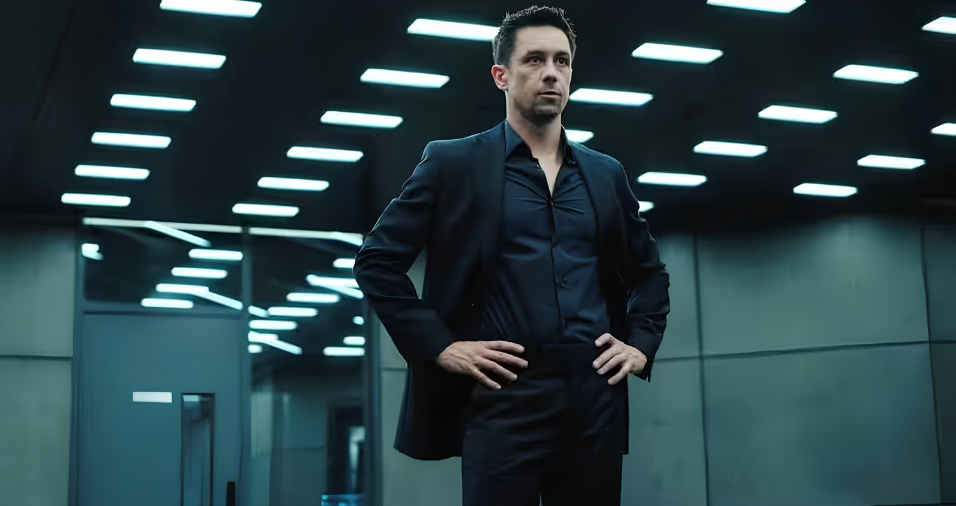
When the first season of The Capture premiered in 2019, it felt like one of those thrillers that pushed today’s technology just far enough into the future to make it feel like science fiction.
Having just watched its third and possibly final season, it has struck me that its central premise was simple and chilling. It put forward what might happen if CCTV footage could be manipulated in real time and could no longer be relied upon as evidence. It was and is gripping television because it asked a question most of us had never considered: What happens if seeing is no longer believing?
Seven years later, with the third season having aired, that question no longer belongs to fiction.
BBC Drama Director Lindsay Salt has been reported as saying that the latest season is “an irresistible blend of timely, state-of-the-nation commentary with edge-of-your-seat thrills”, saying creator Ben Chanan’s scripts would “dazzle and terrify you in equal measure”. Executive producer Rosie Alison called The Capture a “zeitgeist thriller”, adding that it taps into “the shifting nature of truth as deepfakes become ever more pervasive.”
What’s remarkable is that the people behind the series seem to understand they’ve stopped imagining the future. They appear to have documented a present that’s changing faster than anyone expected.
When the second season aired in 2022, artificial intelligence was still largely a curiosity. Image generators were crude and deepfake videos existed, but usually fell apart under close inspection. Remember the mess that was Trump playing basketball with Obama in 2022. Most people assumed they’d always be able to tell the difference between something real and something manufactured.
Today, anyone with an internet connection can generate realistic photographs of events that never happened, clone someone’s voice or create convincing video in a matter of minutes. What was once the preserve of intelligence agencies and Hollywood studios is now available through everyday software.
A recent controversy involving actor Penn Badgley shows just how quickly we’ve crossed that line. A TikTok video appeared online showing the You star in what looked like a perfectly ordinary social media clip. Millions of people watched it and hardly anyone questioned whether it was genuine. It wasn’t. The entire video had been created using artificial intelligence.
What made the story significant wasn’t simply that people were fooled. It was that even after the truth emerged, many admitted they would never have recognised the clip as synthetic without someone pointing it out. The obvious visual glitches that once exposed AI-generated video are rapidly disappearing. The technology has become sophisticated enough that our instincts are no longer reliable.
That’s exactly the world The Capture imagined years ago. The series has never really been about surveillance or espionage. It’s about trust.
Every functioning society depends on shared assumptions about reality. We have come to rely on “real” evidence being to convict people. Whole democracies depend on voters believing they can distinguish fact from fiction. Even relationships themselves are built on the expectation that people are telling the truth.
Artificial intelligence is beginning to unsettle all of this as we enter a world where everything can be questioned. Ironically, that doesn’t simply make lies easier to create, it actually makes truth harder to prove.
Researchers have a term for this. They call it the “liar’s dividend”. Once convincing fake content exists, anyone confronted with genuine evidence can simply claim it was generated by AI. Authentic footage loses its authority because plausible alternatives exist. Just pause to think about that. This notion of plausible deniability is perhaps the most unsettling implication of all.
For generations we’ve lived by the phrase “seeing is believing”. Artificial intelligence is quietly reversing that assumption. Increasingly, seeing means very little unless you can verify where something came from, who created it and whether it has been altered.
Truth is becoming something that requires investigation rather than observation.
The Capture apparently recognised this before most of us did back in 2019. What’s particularly impressive about the third season is that artificial intelligence itself is never really the villain. The people who rely on it are.
AI doesn’t possess ethics or understand justice, compassion and honesty. It simply amplifies the intentions of those who build it and those who choose how to use it.
The same technology that fabricates convincing video can detect disease, translate languages, make education more accessible and accelerate scientific discovery.
Technology is neither good nor evil. Power, however, has always demanded scrutiny. That’s the deeper question The Capture keeps asking.
Who controls these systems? Who decides when they’re deployed? Who audits the algorithms? Who watches the people doing the watching?
These aren’t hypothetical questions confined to fictional intelligence agencies.
Governments are investing in AI-assisted policing. Most businesses use artificial intelligence to monitor productivity and it will most likely mean some jobs may not exist in the very near future. Political campaigns employ predictive algorithms to target voters with extraordinary precision. Social media platforms decide what billions of people see through machine learning systems few of us understand.
None of these developments are necessarily sinister. Taken together, though, they create a society where invisible algorithms increasingly shape visible reality.
Another unsettling plot point The Capture uses to challenge us is blind obedience and defference to AI. It imagines an “AI cult” called The Increment, which is an elite, shadowy military/intelligence that completely defers all command, operational planning, and decisions of life and death to Simon, a powerful and all-knowing predictive military artificial intelligence. Members of this rogue unit blindly follow what “Simon says”. The AI calculates risks, orchestrates political outcomes, and manages covert missions, effectively destroying human agency and substituting machine judgment for state policy.
It seems even The Increment was partially based on fact as series creator Ben Chanan recently interviewed by the Guardian revealed: “The tech is all well-researched and we have military consultants but there’s serendipity too. I decided Killian’s character should come from E Squadron, nicknamed The Increment. They’re special forces but operate outside the SAS and SBS, answerable to no one but themselves and MI6. They’re the best of the best and get up to some dark covert stuff. By chance, one of our police advisers had a colleague who was ex-E Squadron, so we were able to get really good insights.”
Perhaps the greatest ethical challenge isn’t whether AI can deceive us. It’s whether we’ll stop questioning what technology presents to us because it appears to convincingly have all the answers.
We’re already outsourcing more decisions than we realise. We trust the GPS on our phones without checking a map. Algorithms tell us what to watch and read an increasingly, we’re tempted to accept information because it looks polished rather than because we’ve examined whether it’s true.
The danger isn’t that artificial intelligence becomes more intelligent than humanity. It’s that humanity becomes less discerning. The ethical question isn’t whether we should fear AI. Nor is it whether we should embrace it without hesitation. The question is whether our technological progress will be matched by moral wisdom. Should we be outsourcing decision making to AI? That’s the elephant in the room.
Wisdom asks different questions from innovation. It asks not only whether something can be built, but whether it should be, why and for what purpose. It values transparency over manipulation, accountability over secrecy and human dignity over efficiency.
Those are the questions The Capture leaves hanging in the air long after the credits roll for me.
Back in 2019, it imagined a world where reality itself could be edited. In 2026, that world is already here.
We consume so much content every day, what we see and hear will become increasingly harder to discern.
The Capture no longer feels like speculative fiction. It feels like a warning we’ve finally caught up with.
The real question isn’t whether artificial intelligence will reshape our understanding of truth because it already has. The question now is whether our ethics can keep pace with the technology we’ve created.
If we can no longer trust what we see, what will we choose to believe?
Follow Adrian Drayton on his Substack The Long Conversation – where he writes about faith, culture and media and the questions shaping our common life.