


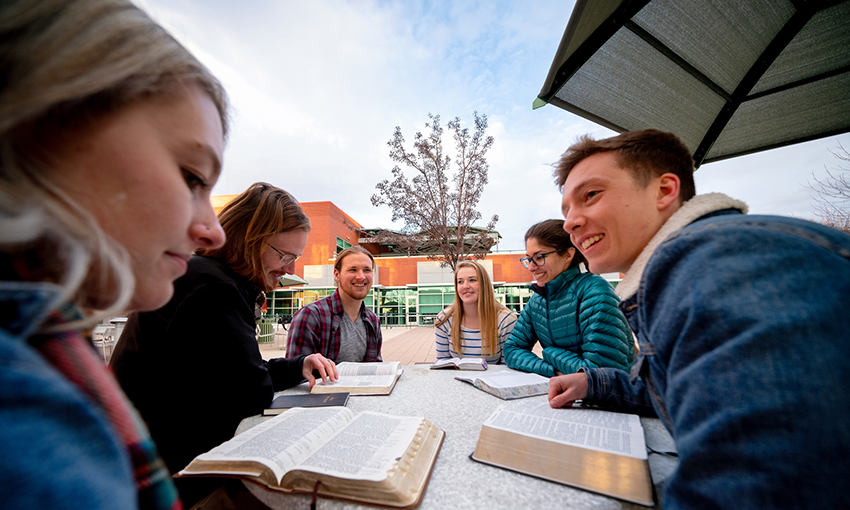
Gathering with other believers is still a central practice for Christian life. You can access sermons, music, and teaching online, but Scripture calls you to something more than receiving information. Hebrews 10:25 urges you not to neglect meeting together, because the Christian life grows through shared commitment, shared worship, and shared accountability. When you gather, you place yourself within a community shaped by Christ’s presence and by the habits that form faith over time.
Worship is one reason gathering matters. In Psalm 122:1, the writer expresses joy in going to the house of the Lord. That joy grows from participation, not from distance. When you sing, pray, or read Scripture with others, you take part in a pattern that has anchored God’s people through changing times. Jesus said in Matthew 18:20 that where two or three gather in his name, he is among them. The verse does not elevate numbers or performance. It highlights presence. When you stand with others in prayer or song, you acknowledge that following Christ is not a private pursuit. You join the voices and prayers of people who are seeking the same hope and learning the same way of life.
Encouragement also requires presence. Hebrews 10:24 calls you to consider how to provoke one another to love and good deeds. Encouragement is not only about helping someone feel stronger. It is about directing each other toward faithful action. You notice who is struggling when you see them. You learn who needs support because you talk with them. You receive encouragement when someone listens to you or prays with you. These small moments shape your faith. They cannot be replicated by watching a service at home. Online worship can offer teaching, but it cannot offer the gentle correction, the honest conversation, or the shared silence that emerges when people are physically present with one another.
Accountability is another reason gathering still matters. Galatians 6:1 calls you to restore one another in a spirit of gentleness. Accountability is not about control. It is about helping each other live the life Christ calls you to live. When you gather, you place yourself among people who can remind you of what is true, who can challenge you when you drift, and who can stand with you when you fail. James 5:16 tells you to confess your sins to one another and pray for one another. That practice requires trust built over time. It grows when you share meals, attend worship, work on ministries, or sit through difficult meetings together. Accountability is relational, and relationships deepen when you are present.
The difference between watching online and being physically present becomes clear when you consider the kind of formation the Christian life requires. When you watch online, you control the environment. You pause, rewind, or multitask. You listen when it suits you. You remain unseen. When you gather, you give up that control. You sit next to someone you may not know well. You listen even when the message challenges you. You join prayers that may not reflect your mood. You open yourself to the possibility that God will work through the people around you. That act of showing up shapes your character. It teaches patience, humility, and commitment. You cannot learn those habits in isolation.
Gathering also teaches you to see the church as a body rather than a broadcast. Paul writes in 1 Corinthians 12:27 that you are the body of Christ and individually members of it. A body functions through connected parts. When you stay online, you become a viewer instead of a participant. The church becomes content instead of community. But when you gather, you recognise that your presence matters. Others notice when you are there. Your voice adds to the prayers and songs. Your service contributes to the ministry. Your questions help shape the conversation. Being present builds a shared identity that online participation cannot create.
Your gatherings also testify to the hope you share. Acts 2 describes believers who met regularly, prayed together, and cared for one another. Their life together became a witness to the surrounding community. When you gather, you show that faith is not merely a private belief. You show that Christ forms a people who support one another and seek the good of others. Your gatherings do not need to be large or impressive. They simply need to be grounded in prayer, Scripture, and mutual care. Those practices speak clearly in a world where isolation often shapes daily life.
Gathering does not ignore the value of online access. Online worship can serve those who cannot attend due to illness or distance. It offers teaching to people exploring faith. But it cannot replace the depth of relationship that comes from being physically present. Even Paul, who wrote letters across great distances, longed to see the churches face to face. Romans 1:11 expresses his desire to visit believers so that they might strengthen one another. His longing shows that presence is not an optional extra. It is part of the Christian life.
Hebrews 10:25 calls you to keep meeting together because gathering trains you in faith, hope, and love. When you show up, worship with others, and open your life to mutual guidance, you practise the way of Christ. You offer your presence as a gift to others and receive theirs in return.
Gathering still matters because it shapes who you are becoming. It embeds you in community, grounds you in Scripture, and keeps you connected to the people God has given you.