


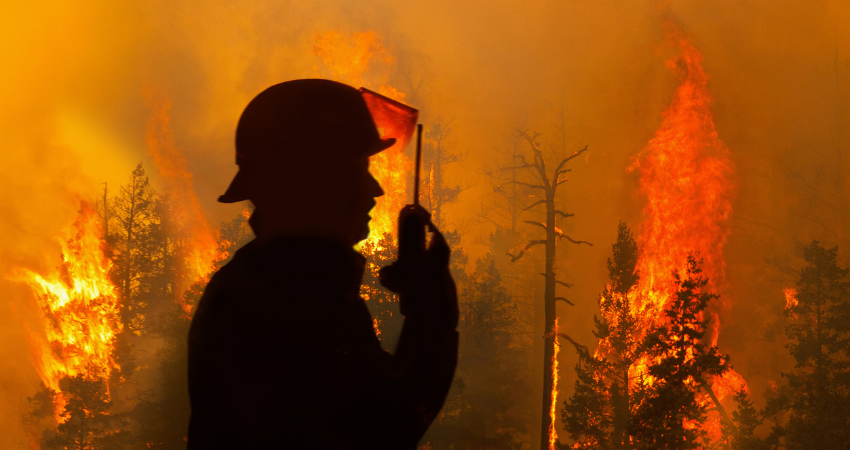
The smoke drifting across Victoria this summer has felt painfully familiar, towns evacuated, homes lost, firefighters stretched to their limits, communities watching the horizon waiting for relief that doesn’t seem to come.
As fires continue to burn across parts of Victoria, experts warn that some blazes could last for weeks without significant rainfall. More than 500structures have already been destroyed, lives have been disrupted, and one life has been lost. For many Australians, especially those who lived through the Black Summer fires of 2019–20, this season has reopened old wounds.
Yet this time, the question is harder to ignore: are these fires still “natural disasters”, or are they signals of something deeper and more enduring?
Australia has always been a land of fire. But the scale, intensity and frequency of recent bushfire seasons tell a new story. Fire authorities have warned that the 2025–26 season carries heightened risks across large parts of the country, fuelled by a dangerous mix of high temperatures, prolonged dry conditions and heavy fuel loads created by previous wet years.
Climate scientists are clear: climate change is reshaping Australia’s fire seasons. The country has already warmed by more than 1.5°C since national records began. Hotter days, longer heatwaves and more severe droughts are becoming normal rather than exceptional. Once a fire starts under these conditions, it becomes harder to control and far more destructive.
While lightning still ignites some fires, around 90 per cent of wildfires in Australia are caused by human activity from unattended campfires and discarded cigarettes to machinery sparks, electrical faults and arson. In a warming climate, these small moments of carelessness can trigger catastrophic outcomes.
The Black Summer fires remain one of the most devastating events in Australia’s recent history. In New South Wales alone, 26 lives were lost, nearly 2,500 homes were destroyed and 5.5 million hectares of land were burnt. The impact on wildlife, ecosystems, farmers and local economies was unprecedented.
What makes the current fire season especially confronting is that it no longer feels like an anomaly. Instead, it appears to be part of a new baseline where extreme events are no longer rare but recurring.
And bushfires are only one piece of the puzzle.
Across the country, climate change is already affecting how Australians live, work and relate to the land. Scientists project that Australia will continue to become warmer, with more hot days and fewer cold ones. Snow cover will decline. Sea levels will keep rising, and oceans will continue to warm and acidify.
Rainfall patterns are also shifting. Southern Australia is expected to experience less winter and spring rainfall, while Tasmania may see wetter winters. Northern Australia faces more uncertainty, while heavy rainfall events when they occur are likely to be more intense.
These changes don’t happen in isolation. Climate impacts are cascading and compounding, affecting water security, food production, health, biodiversity and housing often all at once.
Some of this change is already “locked in”, even if global warming is limited to 1.5°C. What happens next depends on how far global temperatures rise and how seriously governments, institutions and communities respond.
Australia is not standing still. Across sectors, there are efforts to adapt to a changing climate—by improving water security, strengthening building standards, changing farming practices and preparing communities for extreme heat, floods and fires.
Water restrictions, recycling and desalination plants are helping cities manage drier conditions. Farmers are trialling new crop varieties and climate-informed planning tools. Urban planners are expanding tree canopies and designing heat-resilient buildings. Fire agencies are adjusting prescribed burning schedules and investing in early warning systems.
Yet progress remains uneven. There are gaps between what is being done and what is needed. Barriers include limited access to local climate data, fragmented decision-making across governments, funding constraints and differing attitudes towards risk.
For some natural systems such as coral reefs, alpine ecosystems and kelp forest, there are also limits to adaptation. Once certain thresholds are crossed, recovery may not be possible.
As Australians watch fires burn across Victoria this summer, the conversation cannot stop at emergency response alone. These moments demand deeper reflection about responsibility, justice and the future we are shaping.
Later this year, global leaders will gather in Türkiye for the next United Nations climate conference (COP). These meetings can feel distant from the realities of firegrounds and evacuation centres, yet they matter deeply. Decisions made at COP influence how quickly emissions are reduced, how adaptation is funded and how vulnerable communities both here and around the world are supported.
Australia arrives at these global conversations carrying its own stories of loss, resilience and warning. The fires burning now are not just local tragedies; they are part of a global climate story that calls for collective action.
Choosing a Different Future
For faith communities, climate change is not only an environmental issue rather it is a moral one. It raises questions about care for creation, protection of the vulnerable and responsibility to future generations.
The fires of this summer remind us that climate change is not a distant threat. It is here, shaping lives, landscapes and livelihoods. While adaptation can reduce harm, it cannot replace the urgent need to address the root causes driving these changes.
As we continue fighting the fires and rebuilding begins once again, Australia faces a choice: to treat each disaster as an isolated crisis, or to listen to what the land and the flames are telling us.
The question is no longer whether the climate is changing. It is whether we will change with it wisely, justly and in time.


1 thought on “What Australia’s Burning Summer Is Telling Us”
Maybe if people stop catching so many planes and driving huge vehicles it might help. And put pressure on huge greenhouse gas emitters like China at 30+% rather than Australia at 1%.